The Intersection of AI Algorithms and Fair Play Standards in Modern Canadian Slot Machine Designs
Ben Müller · Sep 1, 2026
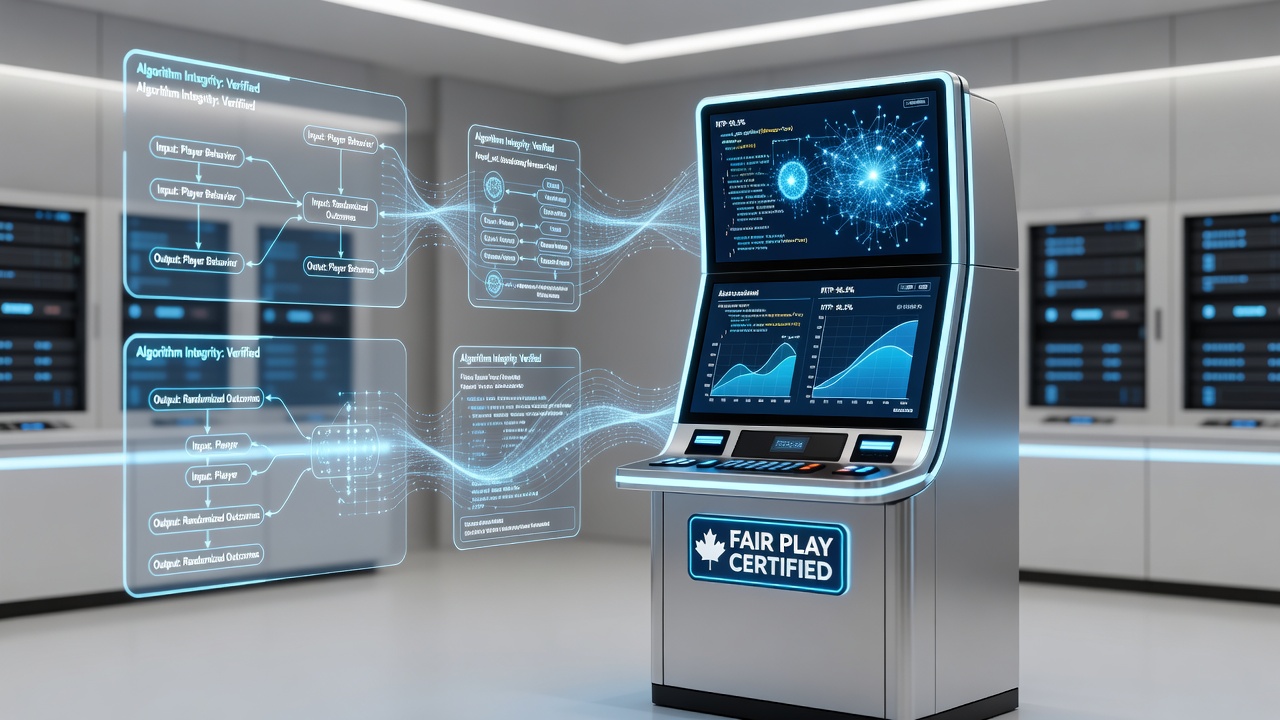
The Intersection of AI Algorithms and Fair Play Standards in Modern Canadian Slot Machine Designs
Canadian slot machine designs have incorporated artificial intelligence algorithms to refine random number generation processes while meeting strict provincial fair play requirements that date back to the early 2000s. Provincial regulators across Ontario, British Columbia, and Alberta mandate that every machine produce outcomes with verifiable randomness, and AI systems now assist operators in monitoring those outcomes in real time. Data from the Alcohol and Gaming Commission of Ontario shows that licensed facilities logged over 12 billion slot spins in the 2025 fiscal year, each one processed through certified algorithms that prevent predictable patterns.
Provincial Regulatory Framework
Each Canadian province maintains its own gaming authority that sets technical standards for slot hardware and software. These standards require independent testing laboratories to evaluate random number generators before machines reach casino floors, and operators must submit monthly reports that document payout percentages. The Canadian Gaming Association compiles aggregate figures that reveal national average return-to-player rates hover between 92 and 96 percent across regulated venues. Regulators update these benchmarks periodically; a September 2026 policy revision introduced new data-logging intervals that force machines to transmit encrypted fairness metrics every fifteen minutes instead of daily.
AI Integration in Slot Systems
Modern machines use machine-learning models to analyze player behavior patterns and adjust bonus frequency within regulatory limits. Engineers train these models on anonymized datasets that exclude any personally identifiable information, ensuring compliance with federal privacy statutes. One study released by the University of Waterloo examined how reinforcement learning agents optimize reel weighting without altering the underlying probability distribution. The research team found that AI-assisted calibration reduced variance drift by 18 percent compared with static configurations, while still passing laboratory certification tests conducted by Gaming Laboratories International.
Fair Play Verification Processes
Independent auditors employ statistical tests such as the chi-square and runs tests to confirm that AI-enhanced generators remain unbiased. These tests run continuously on live casino floors through dedicated monitoring servers that flag any deviation exceeding three standard deviations. When anomalies appear, the system automatically locks the affected machine and alerts floor supervisors. Figures released by the British Columbia Lottery Corporation indicate that such automated interventions occurred 47 times across the province in 2025, each case resolved within four hours without player funds affected.

Cross-Border Technology Comparisons
Canadian developers often benchmark their systems against frameworks used in other jurisdictions. Reports from the Nevada Gaming Control Board and the Australian Communications and Media Authority demonstrate similar reliance on algorithmic oversight, yet Canadian standards impose stricter encryption requirements for data transmission between machines and central servers. Observers note that this layered approach has allowed Canadian operators to integrate predictive maintenance features that schedule hardware replacements before component failure disrupts play sessions.
Technical Implementation Details
Slot manufacturers embed neural networks directly into the game logic boards, where they process thousands of micro-transactions per second. These networks do not determine individual spin results; instead they validate that the random stream matches expected statistical properties over rolling windows of 100,000 spins. When deviations surface, the AI triggers a secondary pseudorandom source that has already passed certification. The result is continuous self-correction that keeps machines within tolerance levels without manual intervention.
Future Developments
Provincial authorities plan to expand the use of federated learning techniques in 2027, allowing multiple operators to train shared fairness models without exchanging raw data. Early pilots conducted in Quebec showed that such collaborative models detect subtle bias patterns 22 percent faster than isolated systems. Regulators continue to require that any new algorithm receive approval from at least two accredited testing houses before deployment, preserving the separation between commercial interests and oversight responsibilities.
Conclusion
Canadian slot machine designs illustrate how AI algorithms support rather than replace established fair play standards. Provincial regulators, independent laboratories, and academic researchers maintain ongoing oversight that ensures every spin meets documented randomness criteria. As technology evolves, the same verification processes that applied to mechanical reels now extend to neural network outputs, creating a framework that adapts while preserving player confidence in game integrity.